
VPN Test: How to Check Your VPN Is Working

A VPN that says “Connected” is not proof of anything. We learned that the practical way: one of the ten VPNs we tested was leaking our DNS requests straight to our internet provider while showing a green tick. Testing your own takes about five minutes and needs nothing but a browser.
Test 1: has your IP address changed?
- With the VPN off, search “what is my IP” and note the address and the location shown.
- Turn the VPN on and connect to a server in another city or country.
- Refresh the page.
The address and location should now match the VPN server, not your home. If they have not changed, the VPN is not carrying your traffic.
Test 2: DNS leak test
Every time you visit a site, your device asks a DNS server to look up its address. If those requests still go to your internet provider while the VPN is on, your provider can see every site you visit. That is a DNS leak.
- Connect the VPN.
- Open a DNS leak test site such as dnsleaktest.com or browserleaks.com and run the extended test.
- Look at who owns the DNS servers listed.
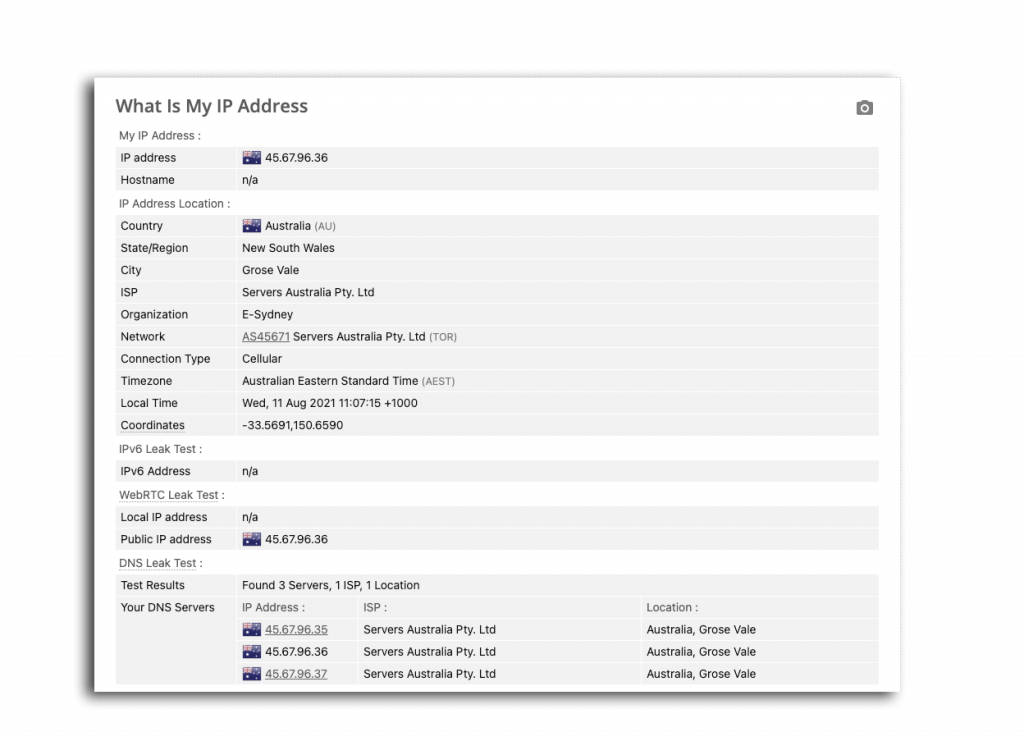
You want to see the VPN provider, or a neutral DNS service in the VPN server’s country. If you see your own internet provider’s name, you have a leak.
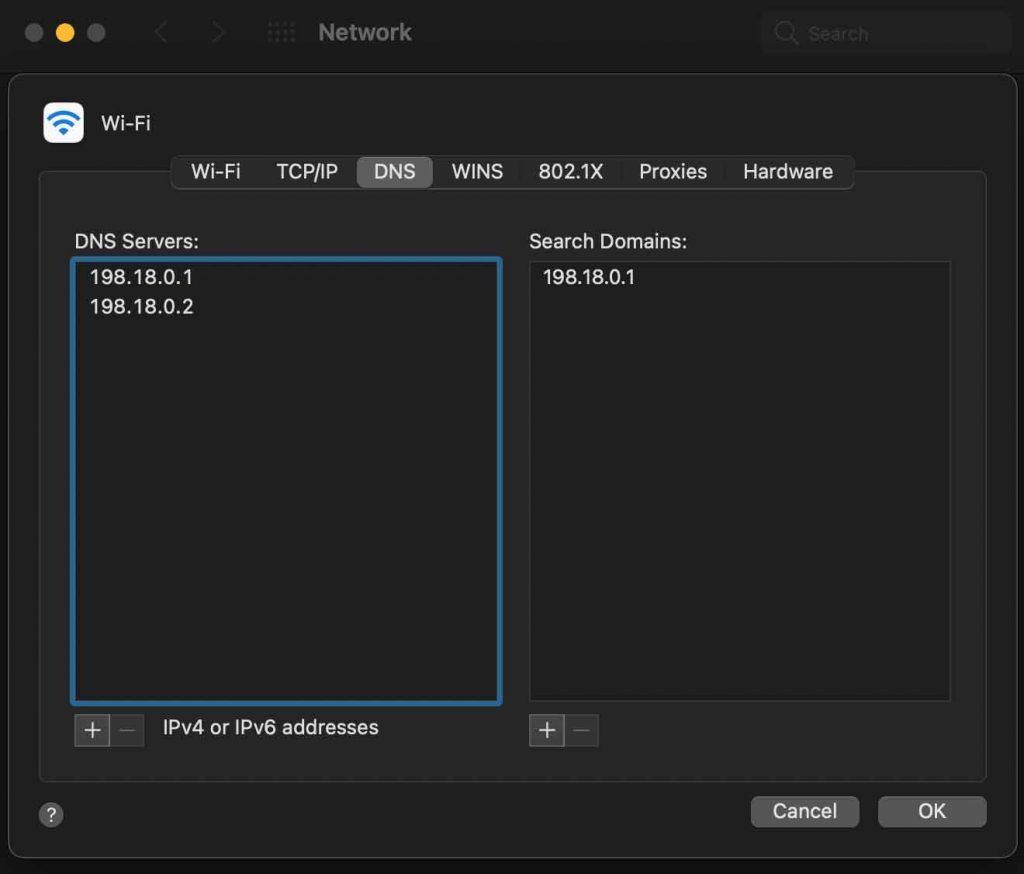
What we found. When we tested IPVanish from Melbourne in August 2021, our IP address was hidden but the DNS test showed our own provider. Support gave us the fix in one chat: set IPVanish’s DNS servers by hand in system settings. After that the test came back clean.
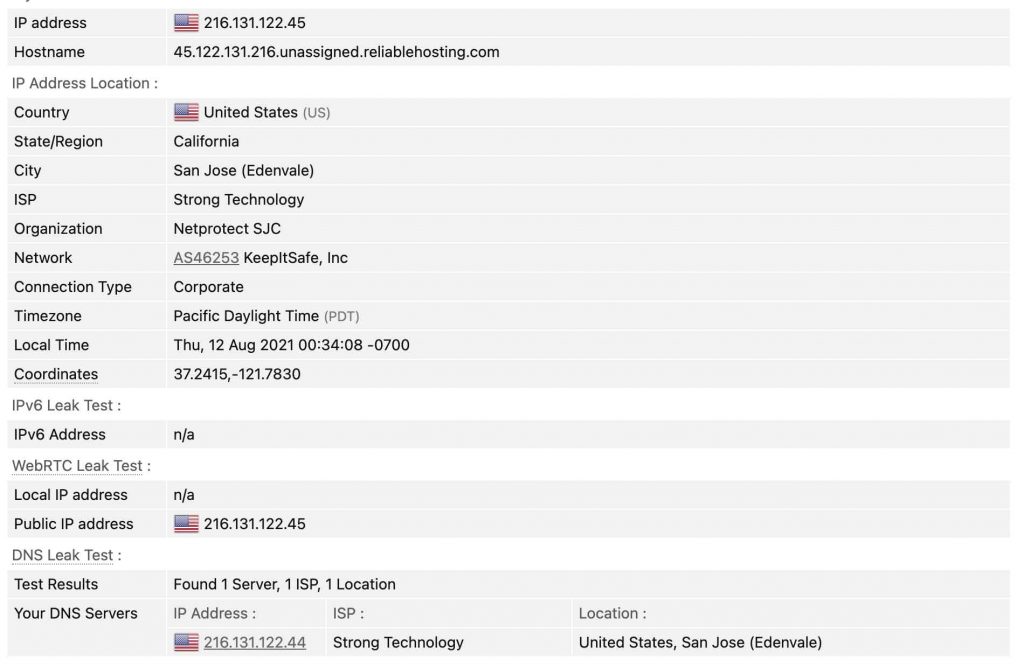
ExpressVPN passed the same check out of the box.
Test 3: WebRTC leak test
WebRTC is the browser feature behind video calls, and it can reveal your real IP address even with a VPN running. The same test sites have a WebRTC check. If your real address shows up, turn on the leak protection in your VPN app, or use the provider’s browser extension, which usually blocks it.
Test 4: does the kill switch work?
A kill switch should cut your internet if the VPN drops.
- Turn on the kill switch in the app’s settings.
- Start something that uses the connection, such as a large download.
- Force the VPN to drop: switch Wi-Fi off and on, or change server mid-download.
Traffic should stop until the VPN reconnects. In our testing, IPVanish shipped with its kill switch turned off, so check the setting before relying on it.
Test 5: speed
Run a speed test with the VPN off, then again on a nearby server. Use the same test site both times and repeat it a few times, as results bounce around.
For a sense of what is normal: on Sydney servers from a 100 Mbps Melbourne connection, the best VPNs we tested lost under 10% of download speed and the slowest lost more than half. The full tables are in our VPN reviews.
If your VPN fails a test
- IP not changing: reconnect, try another server, then reinstall.
- DNS leak: look for a “DNS leak protection” or “use VPN DNS” setting, then ask support.
- WebRTC leak: enable leak protection or use the browser extension.
- Kill switch not working: check it is enabled, and whether it covers the whole system or only chosen apps.
- Still failing: use the refund period. Every provider in our comparison has one.
FAQ
How do I know if my VPN is working?
Your IP address and location change when it is on, and a DNS leak test shows the VPN’s servers, not your internet provider’s.
How often should I test my VPN?
After installing it, after major app updates, and whenever you change a setting such as the protocol.
Can a VPN be detected?
Yes. Websites can often tell an address belongs to a VPN. That is how streaming services block them. It does not reveal who you are.